
Blog / Planning
How in-home and portable oxygen concentrators differ
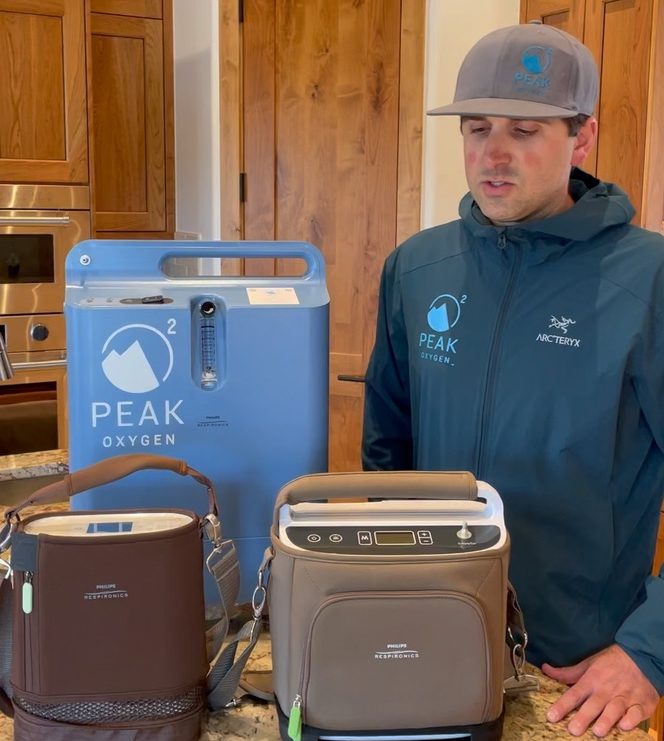
The two machines we rent look different, run differently and suit different parts of a mountain trip, but the question behind most of our calls is simple: which one do I need? This post lays out the practical differences without the jargon, so you can match the machine to how you plan to spend your week at 9,000 feet.
What both machines have in common
Both are oxygen concentrators. Each one draws in the room air around it, pulls out most of the nitrogen and delivers air that is roughly 90 to 95 percent oxygen through a soft nasal cannula. Neither is a tank: there is nothing to refill and nothing that runs out while you sleep. Both are for recreational use at altitude and no prescription is needed. And both arrive the same way, delivered to your lodging in the town where you are staying, with the same simple pickup when you leave.
The in-home concentrator: the workhorse for your lodging
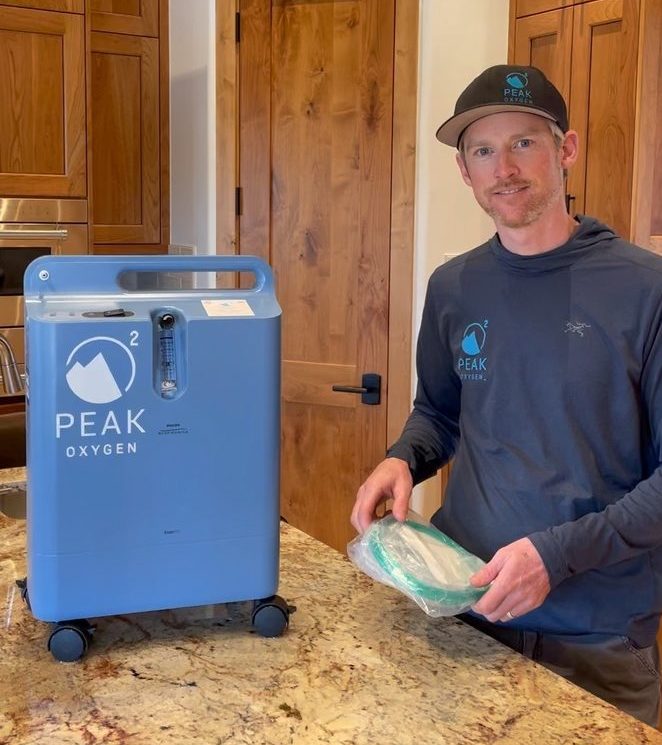
The in-home unit is the one most guests picture. It is about the size of a carry-on suitcase, rolls on wheels and plugs into a normal wall outlet, which means it runs all night without a thought about batteries. It delivers a steady, continuous stream of oxygen that can be turned up to 5 liters per minute, so it covers everything from a gentle trickle while you read to a higher setting after a big day on the mountain. Because the flow is continuous rather than pulsed, it is the machine for sleeping.
Every in-home rental includes extension tubing, so the machine can sit in a corner or a hallway while you use it in bed or on the couch, and a splitter with two nasal cannulas so two people can share one machine. That last point matters for couples: one in-home unit is usually enough for both of you in the evenings and overnight. It does make a steady hum, roughly the sound of a quiet fan, which most people stop noticing after the first night. The only real limitation is that it lives where there is a plug.
The portable concentrator: oxygen that comes with you
The portable unit is a small shoulder-bag machine with a rechargeable battery. It charges from a wall outlet or a car charger, both included, and it goes wherever you go: the drive up from Denver, the chairlift, a walk through the village, a restaurant, the hot tub deck. Instead of a continuous stream, it delivers a pulse of oxygen each time you breathe in, which stretches the battery across hours of use rather than minutes.
That pulse delivery is also why the portable is not the first choice for sleeping. It is designed around an awake, moving person. If you want oxygen overnight, the in-home unit does that job better. Think of the portable as the daytime machine and the in-home as the nighttime machine, and the picture becomes clear.
Which one fits your trip
- Staying put in the evenings and mostly want oxygen for the evenings and overnight: the in-home concentrator.
- Out all day, in the car, on the lifts, walking between the villages, and want oxygen with you: the portable.
- Two people sharing a condo in the evenings: one in-home unit with the included splitter.
- A long first day of travel from sea level, then a week of skiing: many guests take both so the portable covers the drive and the days while the in-home covers the nights.
- Hosting a family group: one in-home per bedroom that wants it, plus a portable to pass around during the day.
Taking both
The in-home and portable bundle is the most common order we deliver during the winter holidays. The two machines arrive together in one delivery, and the bundle is priced lower than renting each on its own. Guests who try it tend to use the portable far more than they expected on the first two days, when the altitude is newest, and lean on the in-home unit for the rest of the week.
A few practical notes
- Both machines come with a short set-up walkthrough, and our set-up guide online shows the same steps with photos.
- Keep either machine away from open flames, fireplaces, stoves and space heaters, and do not smoke near it. Oxygen makes things burn faster.
- You can add extra cannulas, a CPAP adapter kit and a pulse oximeter to keep at checkout if you want to see your own numbers during the stay.
- Deliveries do not require you to be present, so either machine can be waiting in your condo when you arrive.
If you are still unsure which to choose, the honest answer is that most first-time visitors are happiest with the in-home unit, and most repeat visitors add the portable. Have a look at both on our rentals page, pick your town on the locations page, and book for Summit County or the Vail Valley whenever your dates are set. Anyone with medical questions should talk to a doctor before the trip, and if you have questions about the machines themselves, call or text (970) 368-9190.